

LogisticsLast updated
How to Reduce Logistics Costs Without Compromising Service
How to reduce logistics costs: price each line per order, then cut idle stock, oversized cartons and picking walks before you touch the courier.
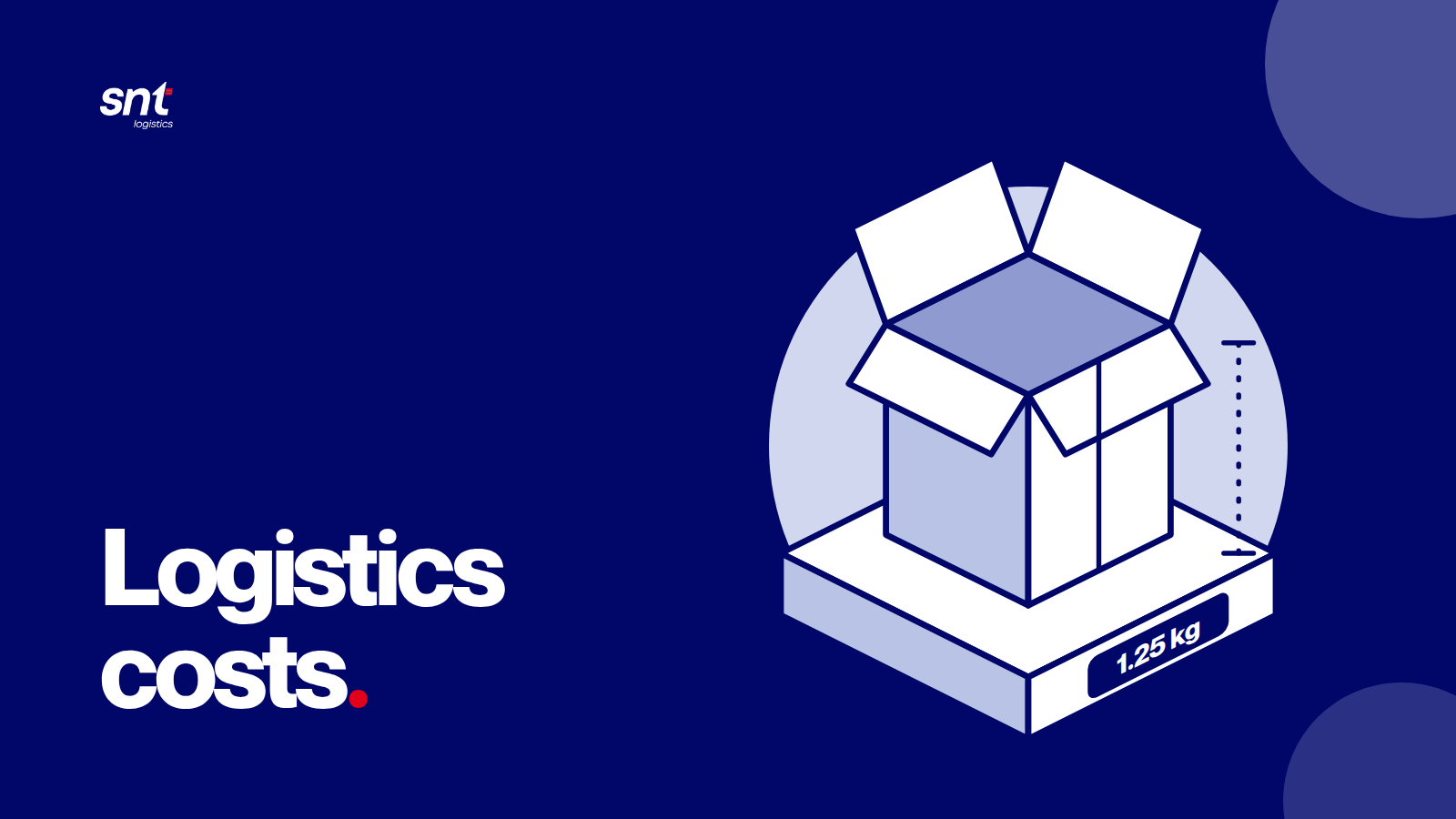
Your logistics bill has crept up, and every ringgit of it comes out of your margin. While the obvious place to look is the courier (the biggest line), it is also the one cut your customers notice.
Reduce logistics costs in this order: work out your cost per order line by line, then clear stock that isn't selling, take the air out of your cartons, and shorten the walk between shelf and packing bench. Only after those three should you renegotiate the courier or slow your delivery promise.
The first three cuts come out of lines your customer never sees, so service holds while the bill falls.
Work out your logistics cost per order, line by line
Pull your last three months of invoices and your order count for the same months. Split the spend into its lines: courier, pick and pack, storage, packaging and returns, plus warehouse staff hours if you run your own space.
Divide each line by the orders you shipped. That gives you a cost per order for every line, which you can set against your margin per order, instead of a total that rises without telling you why.
Here is what that looks like for a brand shipping 2,000 orders a month:
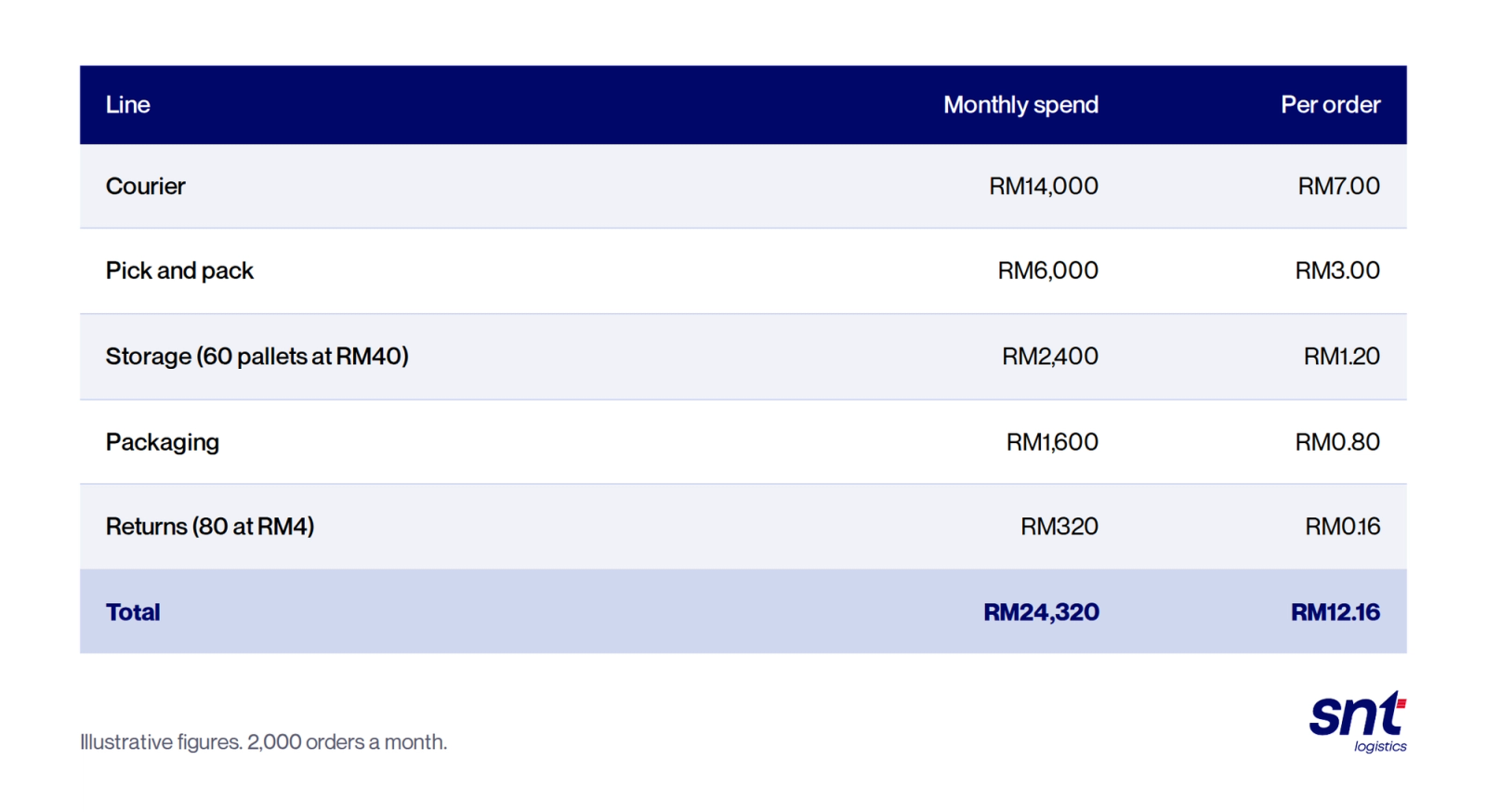
The courier line is more than half the total, which is why it gets cut first. But part of that RM7.00 is set by your carton sizes, not your courier, and part of the storage line pays for stock nobody is buying. Neither cut changes what the customer receives or when.
Next, mark each line by whether the customer can feel it. Delivery speed, the courier's reliability and how the parcel looks on arrival are all visible. Storage, carton dimensions inside the courier's weight bracket, and how far a picker walks are not. Work through the invisible lines first.
If you use a 3PL, the lines on your invoice follow the same logic, and our guide to how 3PL companies charge breaks down each fee.
Clear the stock that hasn't sold in 90 days
Storage is billed every month for every pallet you hold, whether or not a single unit from it sells. A stock-age report from your warehouse system will show every SKU with no sales in the last 90 days.
In the example above, suppose 18 of the 60 pallets have not shipped a unit in three months. At RM40 a pallet, they cost RM720 a month, or RM8,640 a year, to hold stock that is earning nothing (illustrative). That is before the cash you paid for the stock itself, which is sitting on a shelf instead of in your bank. You have four ways out: sell it through as a bundle or markdown, return it to the supplier if your terms allow, move it to cheaper bulk storage away from your pick face, or write it off.
There is one exception worth protecting: stock held for a known peak, such as Raya or the 11.11 sales, stays where it is. The rule is no sales in 90 days and no planned event that needs it.
Clearing idle stock also helps the step after next. Slow SKUs often sit in pick locations that fast sellers should occupy, which lengthens every picker's walk.
Cut the air out of your cartons
Couriers bill each parcel at the higher of its actual weight and its volumetric weight, which comes from carton size. J&T Express Malaysia, for example, calculates domestic volumetric weight as length × width × height in centimetres, divided by 6,000, and charges whichever of the two weights is higher (accessed 25 September 2026).
That formula makes an oversized carton expensive. A 600 g handbag packed in a 40 × 30 × 20 cm carton has a volumetric weight of 4 kg, so it is billed as a 4 kg parcel. The same bag in a 30 × 25 × 10 cm carton comes to 1.25 kg. Nothing about the product or the delivery changed, only the box around it.
Measure your 20 best-selling SKUs and pick three or four carton sizes that fit them with just enough room for protection. Soft goods such as apparel often travel in a flyer bag instead of a carton. Then check two things before you switch: that damage claims do not rise, and that the parcel still looks right when it arrives.
That second check matters because packaging is the one part of this step the customer does see. Cut the empty space and keep the presentation. Our post on how packaging shapes the customer experience covers what is worth keeping.
Shorten the walk between shelf and packing bench
Every metre between a shelf and the packing bench is paid for again on every order that needs that item. No published figure for walking time holds across every layout, so measure your own: ask whoever runs your warehouse to time a picker through a normal hour and note how much of it is spent moving.
Picture your warehouse team's morning without any change. The best-selling tote bag sits in the back aisle because that is where it was put when it launched, so every order that includes it sends a picker to the far end of the building and back. Forty orders mean forty trips.
Now the same morning with two changes. The fastest-moving fifth of the range has been moved to the rows nearest the packing bench, and orders are picked in batches: one walk collects the items for 20 orders, which are then sorted into their parcels at the bench. The tote bag is picked 40 times in two loops instead of 40 separate trips.
Batch picking needs one safeguard, because sorting at the bench is where the wrong item ends up in the wrong parcel. Scan each item at pick and again at pack. A mis-ship costs a return, a reshipment and a customer, which is more than the walk it saved.
If a 3PL does your picking, you pay a per-order rate either way. Ask how it slots your SKUs anyway, because long pick paths are what slow dispatch when order volume jumps in peak season.
Renegotiate courier costs last, and check where your stock ships from
By this point, your parcels are smaller, your volumes are clean and you know your real cost per order. That puts you in a stronger position with couriers than you were in at the start, because you can show them what you ship and how much of it.
Distance is the part of the courier line a better rate won't fix. An order sent from a Klang Valley warehouse to a customer in Singapore is an international parcel, and J&T Express Malaysia works out international volumetric weight on a divisor of 5,000 instead of 6,000. The 30 × 25 × 10 cm carton from the last step now bills at 1.5 kg instead of 1.25 kg, on an international rate. Held in Singapore, the same order is a local delivery.
That is where the choice of warehouse starts to matter as much as the choice of courier. Holding stock closer to where the orders go is part of what a 3PL can do, and it is worth asking any provider you speak to, us included. Splitting stock only pays when enough orders go to one place to cover holding inventory in two sites, so sort your order addresses by postcode before you move a single pallet.
With distance settled, two options cut the courier line without slowing every delivery. Ask for rates based on your actual monthly volume, now that the volume is clean. Or offer a slower free tier alongside a paid express option, so the customers who want speed pay for it.
Before you move all your volume, run the cheaper option on one zone for a month. Track delivery days, failed first attempts, damage claims and customer complaints, and compare them with your current courier. The cost of a slower or less reliable courier never appears on your logistics invoice. It turns up later, in reviews and repeat orders, which is why this step comes last and comes with a test.
Final thoughts
Every cut in this guide comes out of a line your customer never sees, until the courier, and that one goes live only after a month's test. Start with the cost-per-order sheet, because it shows which line is growing and where your orders actually go. If you'd like a second pair of eyes on those numbers, talk to us.
Frequently asked questions
Will moving to a 3PL reduce my logistics costs?
It can, mainly by turning fixed costs such as rent, staff and equipment into per-order and per-pallet charges that follow your volume. Whether it costs less depends on your order count and stock profile, so price a quote line by line against your current cost per order.
How often should I review my logistics cost per order?
Monthly is enough for most brands, with an extra review after each peak season. Peaks change the mix. Returns, temporary staff and overflow storage all rise, and those costs tend to stay on the bill after volume drops unless someone checks.
Does every Malaysian courier use volumetric weight?
Most parcel couriers bill on volumetric weight when it exceeds actual weight, but the divisor varies by courier and service. J&T Express uses 6,000 for domestic and 5,000 for international parcels. Check each courier's own rate card before choosing carton sizes.
Is it worth cutting packaging costs if it affects unboxing?
Only the part the customer doesn't notice. Empty space inside the carton, oversized boxes and excess void fill cost you in volumetric weight and add nothing to the unboxing. Branded tissue, inserts and a carton that fits the product are worth keeping.
Read more
What is Reverse Logistics and How Should Your Brand Handle Returns?
Reverse logistics is what happens after a customer sends an order back. How to receive, grade and resell returns before they lose their value.
Omnichannel vs Multichannel Fulfilment: Which Setup Is Right for Your Brand?
Omnichannel vs multichannel fulfillment: separate stock per channel, or one stock count for all. What each does well, and the signs it's time to switch.

3 Signs Your Fulfillment Service is Holding You Back
Is your fulfillment service falling behind? Three signs to check: missed cut-offs, errors you hear about from customers, and requests that take a week.
Which 3PL Provider in Malaysia is Right for Your Lifestyle Brand?
3PL providers in Malaysia compared: DHL, Ninja Van, Locad, URSTORE, SNT and marketplace fulfilment, and which type suits which kind of brand.