

WarehousingLast updated
Warehouse Setup Checklist: 5 Eessential Steps Before Go-Live
A warehouse setup checklist in the order that matters: measure your stock, plan the floor, pick systems, write processes, then run a mock day.
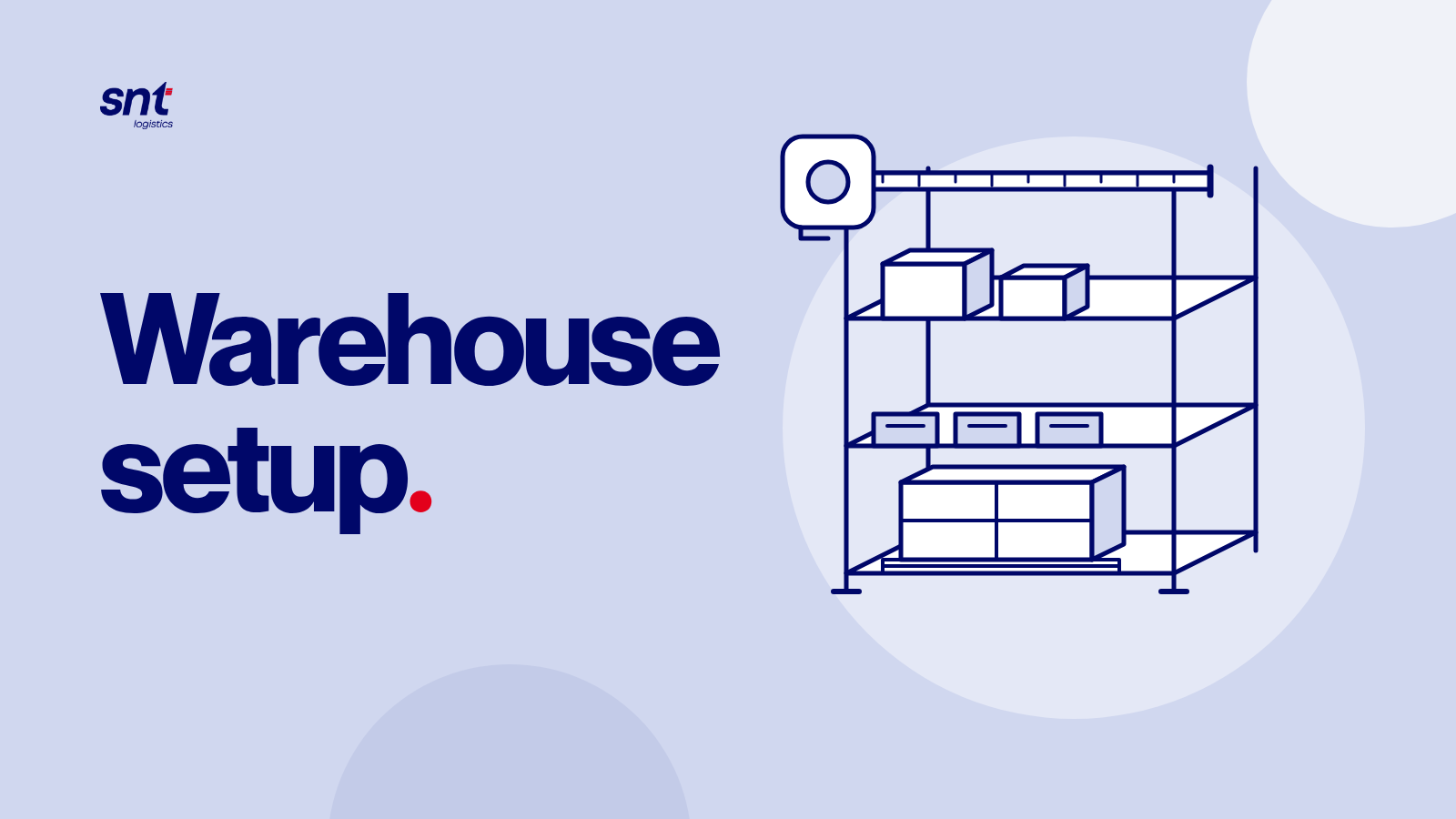
You have signed the lease on your first proper warehouse, and the racking supplier wants a purchase order this week. Hold it for now.
Set a warehouse up in five steps, in this order: measure what will sit in it, lay out the floor around how orders move, choose your systems, write your processes, and run a mock day before you go live. Each step decides the next one.
The expensive mistakes come from doing them out of order, and the hardest one to undo is buying racking before anyone has measured the stock that will sit on it.
1. Measure your stock profile before buying racking or equipment
Start with your order profile, because every later decision depends on it. Pull it from the last twelve months of sales and purchase orders:
- how many SKUs you carry, and the size and weight of each unit and each inbound carton
- how much of each SKU arrives at once: loose cartons, part pallets or full pallets
- orders per day on an ordinary day and on your busiest day
- units per order, and how many orders are a single item
- which channels you ship to, from parcels for online buyers to pallets for retail stores
That list sounds like admin, which makes it the easiest step to skip. Picture the version without it. The racking supplier quotes by pallet positions, so you buy pallet racking for the whole floor. Then stock arrives, and 600 of your 800 SKUs turn out to be small items that come in cartons of 24 (illustrative). They end up on pallets two levels up, and your pickers climb a ladder for a single lipstick.
Now the version with the profile done. You know only 40 SKUs move in full pallets, so you buy pallet racking for those and shelving with bins for everything else. The small items sit at waist height near the packing bench, and the ladder stays in the corner.
The profile also tells you how much space you actually need. Size it for your busiest month, not your average one, because that is the month when a full floor costs you orders.
2. Design your warehouse floor layout around order flow
A good layout follows the stock in one direction: in through receiving, into storage, out to picking, across to packing and away through dispatch. Every time that flow doubles back on itself, someone walks further and pallets cross paths with people.
Three decisions shape most of the layout.
Put your fastest-moving SKUs closest to the packing bench, because every metre between them is walked again on every order.
Keep receiving and dispatch apart, or split them by time of day, so inbound pallets never block outbound orders.
And set aisle widths from the equipment you will actually run, whether that is a hand pallet jack or a reach truck, using the turning space in its specification sheet before any lines are painted.
Bring in your fire safety requirements at this stage too, before racking goes up. Under Malaysia's Fire Services Act 1988, premises designated by the Fire and Rescue Department need a fire certificate, renewed every year (section 28, Act 341, 2006 reprint). Whether your building is designated depends on its use and size, so check with a fire safety consultant while the layout can still change.
3. Select and set up systems before hiring warehouse staff
Your warehouse management system decides how every process is written, so choose it before the people who will follow those processes start. At a minimum, it needs to track stock by location as well as quantity, and connect to the channels you sell on so orders arrive without anyone retyping them.
Label everything before stock goes in. Every location gets a barcode, every SKU gets a barcode, and every scan in the system maps to a physical spot on the floor. A warehouse that labels locations after it has filled them spends its first month searching.
Then test with real data. Load a copy of last week's orders and run them through the system end to end, from order import to shipping label. Gaps show up here cheaply: a sales channel that sends addresses in the wrong format, a courier label that prints the wrong size, a SKU set up with the wrong unit of measure.
4. Define standard operating procedures and train your team
Each core process needs a written procedure: receiving, putaway, picking, packing, dispatch and returns. Keep each one to a page that someone can follow at the station, with a photo of what done looks like.
Build the checks into the steps rather than adding them at the end.
- Count inbound stock against the purchase order before it is put away.
- Scan each item at pick and again at pack, so the wrong item is caught at the bench and never reaches a customer.
- Scan each parcel at handover, so you can show the courier exactly what left the building.
Train on the floor with the real equipment. A packer who has packed fifty test orders on the actual bench is ready. One who has read the procedure is not.
5. Run a full mock day, then launch in phases
Before the first real order, run a full day of copied orders through the whole warehouse without shipping them. Time each stage and look for where orders pile up. The cause might be a pick path that crosses itself, a packing bench too far from the dispatch area, or a printer that cannot keep up.
Fix what the mock day finds, then go live in phases rather than all at once.
Move one sales channel or part of your range first, run it for a week or two, and add the rest once the numbers hold.
Choose a go-live date well clear of your peak season. A warehouse that opens in the run-up to 11.11 or Raya learns its first lessons at three times the normal volume.
Final Thoughts
Measure first, and every step after it gets easier. If you would rather hand the setup and the day-to-day running to a partner, that is what contract logistics is for.
Frequently asked questions about setting up a warehouse
How long does it take to set up a warehouse?
It depends on the fit-out, the equipment lead times and any approvals your building needs, so no single figure holds. Work backwards from a go-live date clear of your peak season, and leave room after the mock day to fix what it finds.
Do I need a fire certificate for my warehouse?
If the Fire and Rescue Department has designated your premises, yes. Under section 28 of the Fire Services Act 1988, designated premises need a fire certificate that is renewed every year. Check with a fire safety consultant before you fix your layout.
Should I set up my own warehouse or use a 3PL?
Running your own warehouse gives you direct control but commits you to rent, staff and equipment whatever your volume does. A 3PL turns those into charges that follow your orders. Compare both at your real volume before you sign a lease.
Which warehouse setup mistake is hardest to undo?
Buying storage before measuring the stock. Racking quoted by pallet positions suits brands whose stock moves in full pallets. Brands with many small SKUs need shelving and bins, and finding that out after installation means paying for the floor twice.
Read more
Omnichannel vs Multichannel Fulfilment: Which Setup Is Right for Your Brand?
Omnichannel vs multichannel fulfillment: separate stock per channel, or one stock count for all. What each does well, and the signs it's time to switch.

3 Signs Your Fulfillment Service is Holding You Back
Is your fulfillment service falling behind? Three signs to check: missed cut-offs, errors you hear about from customers, and requests that take a week.
Which 3PL Provider in Malaysia is Right for Your Lifestyle Brand?
3PL providers in Malaysia compared: DHL, Ninja Van, Locad, URSTORE, SNT and marketplace fulfilment, and which type suits which kind of brand.
What is Reverse Logistics and How Should Your Brand Handle Returns?
Reverse logistics is what happens after a customer sends an order back. How to receive, grade and resell returns before they lose their value.